
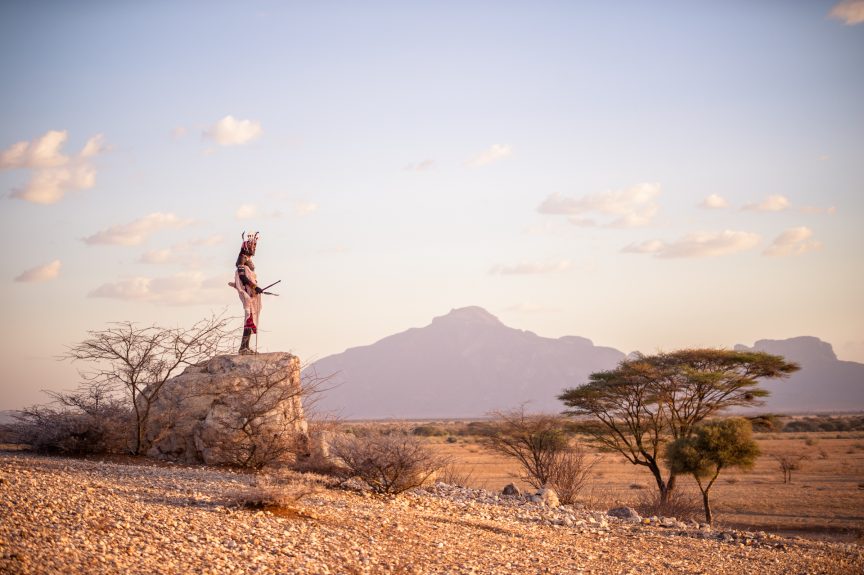
Some of my earliest lessons in this craft served me very well—at the beginning. As I’ve grown, they have stopped being helpful. I suspect this is true for you, too. I was told to put the sun behind me. I was told to fill the frame with my subject. I was told that if I divided the frame into thirds and put the subject on one of those magical lines, then my photographs would be more interesting. For a while, these ideas helped make sense of an otherwise overwhelming craft. They were good lessons for a young photographer making the kinds of photographs a young photographer makes.
I am not a young photographer anymore, and I’m guessing you aren’t, either. You only need a couple of years behind the camera to understand the basics that those initial lessons were meant to teach you. But they weren’t meant to be the only lessons. They were lessons meant for starting, but not for growing. They were meant to make things easy and to get you some early wins with the camera, not to equip you to make photographs that are nuanced, complex, or powerful.
To unabashedly mix my metaphors: early lessons were only about learning to hit the first notes, not to write a song.
One of those early lessons that took me longer to get beyond was the need to fill the frame with my subject. Wait, scratch that. I still believe it’s important to fill the frame, but I understand that idea now in much stronger ways. I give my earliest teachers the benefit of the doubt: they wanted me to learn the basics. In this case, they wanted me to avoid filling my frame with elements that were not my subject—distractions and the kind of flotsam and jetsam that seems to drift into our frames when we’re not intentional about our compositions.
But your subject might not be the thing you think it is.
See the image below. The animal in the frame is a coastal wolf. A younger me would have called that my subject, but she is not. My subject is not the wolf but, rather, the wolf in the landscape. It’s the relationship, and zooming in tight (as I might have done in the past in an effort to “fill the frame”) would have diluted the intended subject of the image.

Perhaps “fill the frame with your story” is a better way to put it because so many people think their subject is the thing. I think the subject is the idea. The story. And very often, the only way to tell the story effectively is to make the thing smaller in the frame so there’s room to fill that frame with other elements that make the story bigger.
Look at the photograph below. The man on the dunes—is he the subject? What would the story lose if I cropped in much tighter? It would change, wouldn’t it? The image wouldn’t be about the desert with a man in it. It wouldn’t be about size, or vastness. It would be about a man with a camera. That wasn’t the story I wanted to tell. It wasn’t the feeling I wanted to create. So I filled the frame with the vastness. The man wasn’t the point; he just helped amplify the point, and he needed to be smaller to do that.

Look at the other three images below. What might they have lost if I had gone tight and made yet another portrait? Would I have lost story? Mood? Visual depth and interest? Would my picture be about something different? Would they be any better?


Wildlife photographers in particular are notoriously good at filling the frame with things. Beautiful, wild things, shot as close as possible, but the more I look at the tighter images, the less story I see. That’s OK; not every photograph needs to tell a story. Sometimes those tighter images are part of a larger story told with more than one photograph. I hope they do that in my own work. But they don’t tell the whole story.
My big challenge to myself, because I’m also learning, is to think bigger by going smaller.
More and more, I find myself dissatisfied with the longest lens/tightest portrait shot. I reach increasingly for the shorter lenses and let myself wrestle with composing a bigger story by letting the main characters share the stage. Pulling back gives scale, gives context, and gives more room for the light and colour to be their own characters. I find myself inhabiting the world of these bigger pictures a lot longer, exploring them visually for longer than I do with my tighter work. I remember them longer, and their impact feels deeper to me.
Of course, this is not only about shooting wider. That’s easy. But as you pull back and include more elements, each of those elements needs to play a part. It can’t just stand on the stage doing nothing. It’s harder to make a meaningful and satisfying image in which all the elements do that. Maybe that’s why the tighter portrait is more common; it’s just a little easier. And I’m not saying those photographs can’t be powerful. They can. But they can also hit the same note a few too many times. They can tell an intimate story, but not a larger story.
My internal quest these days has become a search for scenarios, not just “subjects,” though here I use that word the way I used to mean it: as thing.
Because I’m looking for bigger pictures with layers of impact, not just looking for an elephant (“subject”). I’m looking for a scenario: an elephant with a calf, in a tender moment, in interesting light and a captivating setting. I want to fill my frame with those rather than reaching for my 600mm and excluding them all. Or, more likely, I’ll explore both. But it’s the one with some scale that I think will play much larger and give both my imagination and my emotions more to engage with.
For what it’s worth, I still sometimes shoot with the sun over my shoulder. I haven’t discarded the idea; I’m just happier with backlit or sidelit scenes. I don’t find the rule of thirds completely useless. Look at my work! Plenty of things sit on thirds in my frames. And yes, I sometimes still fill the frame with those things.
The ideas we learn at the beginning don’t stop being useful, but if we want our craft to grow, we need to evolve beyond them and explore all the possibilities.
What would your work look like if you redefined what it means to fill the frame? If you looked at the subject of an image as the idea, story, or the feeling, not the one physical thing on which you set your focus point? What would it feel like if you pulled back a little and gave the other characters—not just living things but trees, rocks, sky, light, space, texture—some room to help tell a bigger story?
Scale is a powerful tool. I’m not going to tell you how to use it, but I’m begging you to explore it
For the Love of the Photograph,
David
Comments
Dear David, your newsletters are always inspiring, thank you very much!
Hi David, I just emailed you a link to a NYTimes story about the photographer who practically hung out a window to get a shot
of the Air Force B-25 that hit the Empire State Bldg – in 1945! I’ve never forgotten that event – I was 8 y.o. I discovered photography a few years after that.
Hi David. Thank you for your article. I couldn’t agree more with what you are saying. I am not a wildlife photographer so I am not the best one to judge but I think that a lot of wildlife photographers just zoom in the maximum they can and create portraits of the animals. They are well exposed portraits and very shard but they are not wildlife photography. They are only a part of it. The environment, the conditions, the presence or the lack of trees/plants, everything should be part of wildlife photography. I think the photographs you used are a very nice example. I remember, when you asked us to vote which photo to be used for your new book, I replied the one with the lion because it includes all this beautiful nature. I think the problem with wildlife photography is the lenses. People are overwhelmed with the reach and they just zoom in, while they could be creating much more interesting images with short telephoto lenses or even wide angle if they get creative. Thanks again for your article. Again I am not wildlife photographer so I am not sure how easy or hard it is, I am just saying what I am seeing as a regular viewer.
Thanks, George. You’ve said a lot of wise things in your comment. The one that stands out is this “I think the problem with wildlife photography is the lenses. People are overwhelmed with the reach and they just zoom in…” I call it lens paralysis. You go out with a $16,000 lens and OF COURSE you’re going to use it, even when it’s not the right tool for the job. Why? It’s the BEST! It’s the BIGGEST. It cost A LOT. But it’s like the old saying “when you’re a hammer everything is a nail.” To be fair, I don’t think this is limited to wildlife. We all have blindspots. A few year back the hot thing was off-camera flash. Put a warming filter on the flash, set the camera to a cooler white balance, and suddenly every photograph everywhere was the same, even where additional light weakened the image. Same with HDR before that. When the tool comes first, the image suffers.
Hi David…thank you for the post. I believe you have been teaching this in your Shoot What it feels like and the Creative Photographer courses. They changed how I shot photos in the Faroe Islands in July. I found myself zooming backing out further to catch a person in the landscape to show depth. I also zoomed out on the animals and puffins to show where they were in relation ship to their surroundings. It really made a difference looking at the photos since I have been back. There is actually a story and not just a zoomed in fill the frame portrait type photo. You’re a good teacher
Thanks Jim. Your words are always full of such encouragement. 🙏
This concept of the subject is not necessarily the “thing” but the “thing” in context. Maybe I knew that but didn’t embrace it. Thanks for the Whack on the Side of the Head.
Whacks are always free and served with a smile. LOL. Thanks for the laugh, Rick. 😂
I used to think of Photography as visual storytelling, it still is.
For me, it all changed when I decided to photograph the relationships inside the frame that included the subject.
Like you, I used to think I had to fill up the frame, and you’re right about it, teaching us to focus on the important things that the subject was to us, but I started looking back through my photographs and realizing that when I included the relationship of the subject to the surrounding backgrounds – it changed my composition forever– and also the focus pardon the poem of what I was trying to convey in the first place.
Thank you for putting together these posts, because you can certainly explain it much better than I! Safe travels, my friend!
Hey Clayton. Always nice to see your name in the comments. I trust you’re well. Thanks for weighing in and saying hello. I’m not sure I explained this better than you but I definitely used way more words! 😉
Hi David,
You nailed this idea! The three African photos really capture the mood and beauty in the scene. I need to slow down and take in the whole scene before I raise my camera!
But it was the man on the dunes that brought your words home. I think I would have been disappointed to discover a man up there after hiking out to get a shot. But with him in it, it reveals the vastness of the dunes, the shadows, and contours. This made me take a closer look at the entire scene. We are headed to the Great Sand Dunes in Colorado on Thursday. Your post was perfect timing!
Hi Lindsey! Thank you for this. You know what’s funny about the dune picture? My first reaction when the man walked into my shot was disappointment. But he was one of my students so I couldn’t yell at him. And then I realized he wasn’t in the way of my shot, he was my shot! Sometimes I need circumstance to intervene and shift me away from my first instinct. Have a great time in the dunes this week.
Thank you for another thoughtful, inspiring, and informative post. As someone who “fills the frame” It has given me a new way of thinking and seeing.
You’re welcome, Ann. Thanks for being here and being part of the conversation. 🙏
This rings true, especially your point that every element has to play a part rather than just stand on the stage. I’d add one distinction that I think trips up a lot of wildlife photographers: small by design versus small by default.
Small by design is what you’re describing. The frame is composed wide in camera because the landscape, light or space is part of the story. Small by default is pulling back on the zoom because a fast subject is hard to follow, then planning to crop later. The two can look similar at first glance, but the second has no story in the extra space and pays for it in image quality.
The test I use: ask what a tighter frame would lose. If the answer is scale, context or mood, the subject is the right size. If the only thing lost is empty space you always meant to crop away, it was never a compositional choice.
Thanks for this one, David.
Andre – Exactly! Small by design vs small by default is a brilliant way of putting it. And your test is exactly right. Well articulated, Andre. Thank you.
Very timely! Off to the Grand Tetons today for 3 days photography!
Have a fantastic time, Cecily!
Very helpful, David. I am always temped to fill the frame and then later find the image lacking. I am a very amateur photographer.
Hi Sheryl. I think I know what you mean when you say you are a very amateur photographer but may I remind you that amateur really just means you do it for the love of it and that’s the very best thing you could ever say about what you do! We all start somewhere, but if you start from love, you’re off to a good start. I’ve been doing this for over 40 years (still an amateur!) and I’m still learning these same lessons over and over again. Keep at it!
Hello! And thanks for the inspiration. I head to Italy this week to spend a couple weeks roaming the streets of Milan, Verona and Rome. One camera, one 18-55 little lens. Your post today is just what I needed to hear!
Hey you! OMG, so jealous of your return to Italy. That little 18-55 will pull its weight. I hope you have a fantastic adventure!
Thank you David as this post hit the nail on the head for me, at this moment as I spent the summer shooting birds as tight as I could and then cropping with my 200-800mm….. literally forgot about the 200-799 range! It’s great to get these reminders from you.
Happy to help, Sandra. Thank you for reading!